Since Trump was inaugurated in January, I have struggled to discern my prophetic voice. When I heard God’s calling to ordained ministry as a sixteen-year-old, I resonated deeply with the prophet Jeremiah, to whom God said, ““Do not say, ‘I am only a boy’; for you shall go to all to whom I send you, and you shall speak whatever I command you.” My seminary education was at Boston University School of Theology, an institution with storied characters like Anna Howard Shaw, Howard Thurman, and Martin Luther King, Jr., aptly named a “college of the prophets.” I was recently sent from the Living School with the Center for Action and Contemplation—what founder Richard Rohr has called “a school of the prophets.” My twenty-five years of ministry have been rooted in a consistently prophetic call.
So how do I give voice to the prophetic utterances the Spirit wants to make in the face of so much grave injustice and falsehood coming out of the White House since January 20? Unlike Mariann Edgar Budde, no one has given me an audience to speak to the president. Unlike William Barber II, my church does not expect me to lead demonstrations for social justice. Unlike Brian McLaren or Barbara Brown Taylor, I serve a congregation comprised of those who voted for this president, and those who did not. As satisfying as it might be to stand in the pulpit and rail against the unjust actions and unholy rhetoric coming out of the administration—and as happy as this might make some in my church—it would accomplish little for the kingdom of God. To do this week after week would only exacerbate polarization among my people, exhaust those who are looking for energy, and maybe even weary those who want to protest policies. What’s a prophetic pastor to do?
The seed of an answer was planted the week of the inauguration. Having skipped the inaugural festivities for work, that Wednesday my wife and I watched all of Trump’s speech (did he really just say it’s now the “Gulf of America”!?). After that, my YouTube feed queued Bishop Budde’s sermon at the National Prayer Service. The juxtaposition between the two was stark. I went to bed with an inner storm churning, but with nowhere to go.
The next morning I got up as usual and did what I always do: Make a cappuccino and read the scriptures and pray. The prayer book I am using gave me just a few verses to work with, but that was enough. John 12:20-21 told of some spiritually hungry Greeks who came to Philip and said, “Sir, we wish to see Jesus.” I heard the message loud and clear: I am called, above all else, to help point others to Jesus. To show them Jesus in my own life, words and conduct. To take up the mantle of preaching in response to Trump would distract from pointing others to Jesus. Curiously, Jesus did not often speak about the unjust power structures he and his people suffered living under Roman occupation. But he did openly critique the religious leaders in his own tradition. Perhaps I am called to speak truth to other pastors who are promulgating Christian nationalism through unbridled support of Trump. But these aren’t listening to my sermons. Better to focus on those who come seeking Jesus.
In the Old Testament reading that morning, I found my prophetic calling in this moment described beautifully by Isaiah:
Here is my servant, whom I uphold, my chosen, in whom my soul delights; I have put my spirit upon him; he will bring forth justice to the nations. He will not cry or lift up his voice, or make it heard in the street; a bruised reed he will not break, and a dimly burning wick he will not quench; he will faithfully bring forth justice. He will not grow faint or be crushed until he has established justice in the earth; and the coastlands wait for his teaching. (Isaiah 42:1-4)
Each Sunday, I find among my people lots of bruised reeds and dimly burning wicks. There are those who are afraid for their LGBTQ+ loved ones. Some face the prospects of their grant-funded research grinding to a halt. Some families are stressed by juggling two careers and raising children. Some shuffle in with physical frailties and jeopardized immunity. Some are struggling to keep their grades and scholarships while dealing with mental health problems. They come in search of something to believe in, something to offer hope, something to expand their hearts of love. Dimly burning wicks do not need to be spewed with righteous indignation. Bruised reeds do not need to be blasted by a mighty wind. They come seeking refuge and sanctuary.
I’m also keenly aware of what one parishioner told me recently, after we spent the first five weeks of the Trump administration reflecting on the full version of the Serenity Prayer: “I’m grateful for all the talk of serenity, acceptance and courage. But what I think we need right now is lament.” She’s right. But it’s hard to lead a congregation in a season of sackcloth and ashes when a good number would be standing up, crying out, “Why are we mourning!?”
Mercifully, Lent begins this week. Perhaps I need to tune my prophetic voice to the song of lamentation. After all, the literary form called a “jeremiad” takes its name from the prophet whose own calling remains deeply resonant with my own. Each person carries their own reeds that are bruised, their own wicks whose flame is growing dim. I will not cry or lift up my voice to make it heard in the street. But I will faithfully seek justice by starting with the just, humane treatment of each soul entrusted to my care, and to the care of our congregation. This is work I will do both through my ministry at the church, as well as the ministry of my reflections here in this blog. Prophetic work is not just about protesting in the streets. Voices need to be carefully, lovingly tuned by the just and compassionate treatment of grace. Then, even if still shaky, they can weather the unholy barrage. Evil will fail to squelch the sound of dimly burning wicks and bruised reeds singing an unchained melody which has been sounding since the dawn of time.




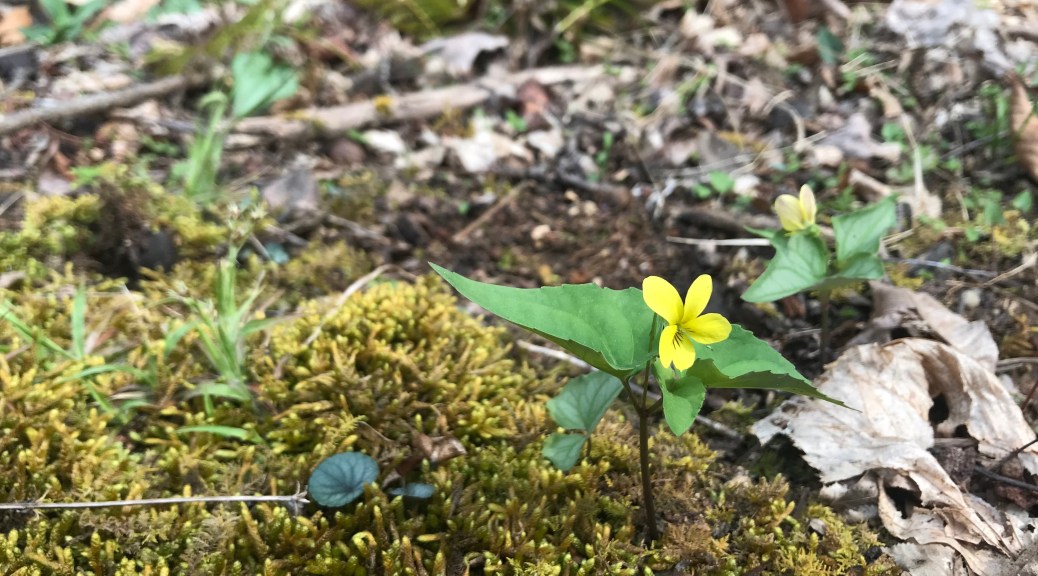
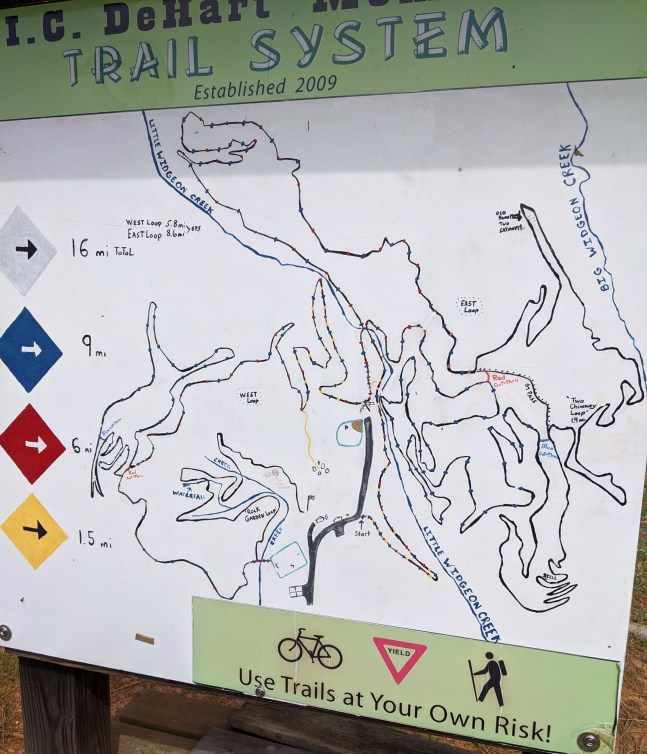
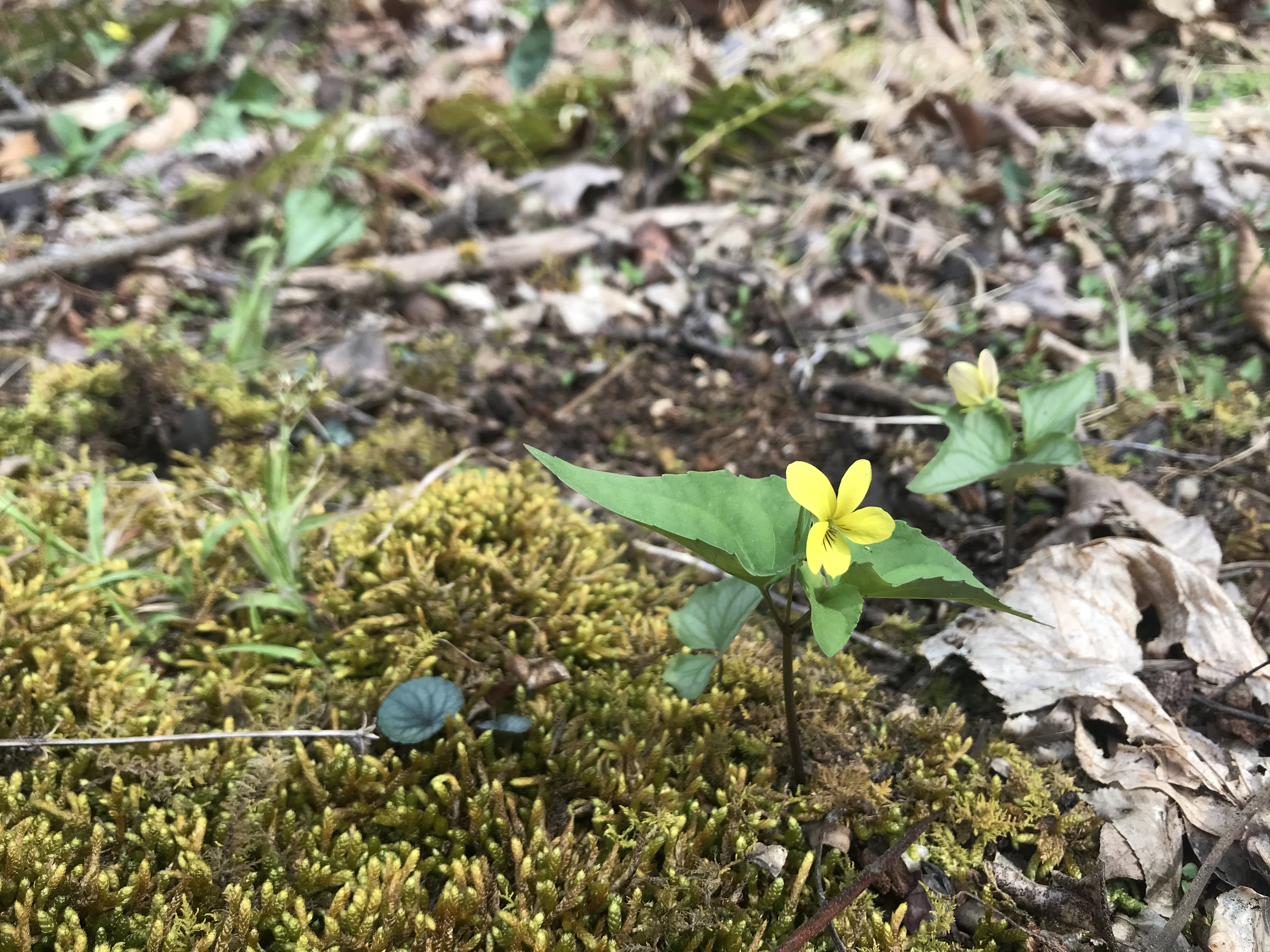 It called to me, this tiny burst of color amid the debris of dried leaves and lifeless twigs. It seemed to say, “Pay attention.” Like a hushed herald of spring, this silent sentinel standing watch by the tomb beckoned me to see what I was too quick to tromp past in my determination to find a worthy destination. Suddenly a veil was lifted from our eyes. Kim discovered periwinkles making glacial tracks in the sandy stream bottom. I saw fresh-green fiddleheads emerging from the waste of spent ferns. Younger-son uncovered a crawdad hiding beneath a rock. Middler-son eventually grew bored of waiting for us down the path, and came back to find us. He, too, joined the fun of exploring the quiet revolution happening right under our noses.

 Ruminating Pastor